Summary: Curd is a fermented dairy ingredient whose proteins and fats may help moisturise hair, ease dryness, and reduce the appearance of frizz. This guide covers the realistic benefits of using curd on hair, explains the trending hair-care ingredient nigella sativa, and shows you how formulated masks can take your routine further. The key takeaway: curd can be a useful cosmetic step, not a guaranteed fix.
|
In This Article: |
You have probably scrolled past dozens of posts promising that a scoop of curd for hair is the answer to everything from dullness to breakage. And there is a grain of truth in there. The benefits of using curd on hair are real, but they are cosmetic, not magical.
Understanding what curd can genuinely do (and where it falls short) helps you build a routine that actually delivers results you can see and feel. Below, we are breaking down the honest picture: what curd offers, which benefits are supported, and how you can complement it with ingredients that go deeper.
Is Curd Good for Hair, and What Can It Realistically Do?
Yes, curd is good for hair. The straightforward answer: curd can offer cosmetic support for dryness, softness, and frizz, but it is not a treatment for hair loss or a substitute for targeted hair-care formulations.
Curd is a fermented dairy product made by culturing milk with specific bacterial strains. That fermentation process gives it a creamy, slightly acidic consistency. The proteins and fats present in curd can help nourish and moisturise hair, which is why applying it as a mask tends to leave strands feeling softer and smoother after rinsing.
Where things get muddled is when those cosmetic perks are stretched into claims about hair growth or scalp healing. Curd can improve how your hair looks and feels on the surface, but it does not penetrate deeply enough to change your hair's internal structure or trigger new growth. Think of it as a helpful, accessible conditioning step rather than a cure-all.
Did You Know? The slight acidity of curd comes from lactic acid produced during fermentation. That mild acidity can help smooth the outer layer of the hair strand, which is why freshly rinsed hair often feels less rough after a curd mask.
What Are the Key Benefits of Applying Curd on Hair?
The most reliable benefits of applying curd on hair centre on moisture, manageability, and the appearance of frizz, all cosmetic effects you can notice after consistent use.
Here is a clear snapshot of what curd can realistically offer:
| Benefit | What Happens | What to Expect |
|---|---|---|
| Moisture boost | Curd's fats coat the strand, helping it retain moisture | Softer, less dry-feeling hair after rinsing |
| Frizz reduction | A smoother outer layer means less flyaway texture | Calmer-looking hair, especially in humidity |
| Added softness | Proteins in curd can lightly condition each strand | Hair that feels smoother to the touch |
| Improved manageability | Moisturised hair tangles less | Easier detangling and styling |
| Subtle shine | A smoother surface reflects more light | A gentle, natural-looking sheen |
How should you apply curd for the best results?
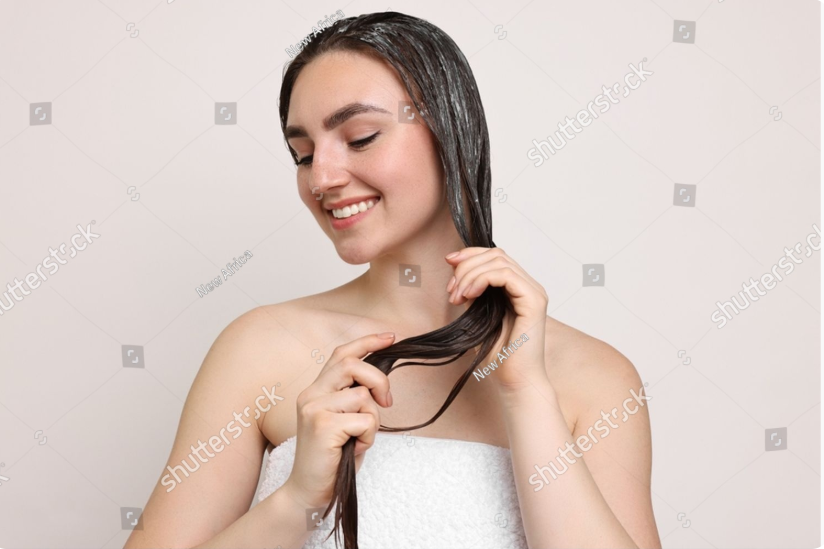
For a simple at-home mask, use plain, unsweetened curd at room temperature. Apply it from mid-length to tips, leave it on for about 20 to 30 minutes, and rinse thoroughly with cool water. Follow with a gentle shampoo to remove any residue.
Tip: Always rinse curd out with cool or lukewarm water, not hot. Hot water can cause the proteins in curd to curdle, leaving stubborn residue in your hair that is harder to wash out.
When you want to hydrate hair with a quicker, mess-free routine, a formulated hair mask can help. Strands that feel dehydrated after washing respond well to a conditioning step with hydrating ingredients, and the Love Beauty & Planet Pentavitin & Hibiscus Mask is designed around exactly that: pentavitin, hibiscus and jojoba oil help hydrate and nourish hair. You can see how it works in this video; look at the mask's hydrating, nourishing routine. Just leave it on for two minutes post-wash and rinse.
If your concern leans more towards breakage, strengthening ingredients are worth exploring. Hair that feels brittle after repeated styling or colouring needs structural support, and the Love Beauty & Planet Curry, Biotin & Moringa Hair Mask combines curry leaf extract, vegan biotin, and moringa to help strengthen and nourish hair from within, while also boosting hair growth.
What Is Nigella Sativa and Why Is It Used in Hair Care?
Nigella sativa is the flowering plant that produces what most people call black seed oil or kalonji oil, and it has become a popular search term in hair-care conversations alongside ingredients like curd and coconut oil.
Why has nigella sativa gained attention for hair?
Black seed oil, extracted from nigella sativa seeds, is valued in hair care for its nourishing properties. It is used in some formulations because it is believed to help support the scalp and may help reduce hair fall when used as part of a consistent routine.
While nigella sativa is a different ingredient from curd entirely, the interest in both follows the same pattern: people looking for natural, accessible ways to support healthier-looking hair. The practical difference is that nigella sativa (as black seed oil) is more commonly found in formulated products like the Love Beauty & Planet Onion, Black Seed Oil & Patchouli Hair Mask. This mask has nourishing properties of black seed oil paired with the fresh uplifting scent of ethically sourced patchouli.
Did You Know? Nigella sativa has been cultivated for centuries, and its seeds yield a dark, aromatic oil. In modern hair-care formulations, black seed oil is typically blended with other ingredients to support scalp nourishment.
Softer, Stronger-Looking Hair Starts Here
Curd is a genuinely useful, accessible ingredient for basic hair conditioning. Its proteins and fats can help moisturise your strands, ease dryness, and reduce the look of frizz. What it cannot do is replace targeted formulations designed for specific concerns like damage, deep hydration, or long-term frizz management.
The smartest approach is a layered one: enjoy curd as a simple, occasional mask, and build your routine around products formulated to deliver consistent results. Pair a gentle shampoo with the right mask for your hair's needs, stay consistent, and you will notice the difference in how your hair feels and behaves week over week.
Ready to find the mask that fits your hair? Take a moment to explore the hair mask range and see which one speaks to what your strands need most.
Frequently Asked Questions
Q:1 Can curd be applied to the scalp, or only to the lengths of hair?
A. Curd can be applied to the scalp in small amounts. Focus mostly on lengths and tips, and rinse thoroughly to avoid residue build-up.
Q:2 How often should a curd hair mask be used in a week?
A. Once a week is a comfortable starting point. Monitor how your hair responds and adjust frequency based on how soft or weighed-down it feels.
Q:3 Does curd work differently on oily hair compared to dry hair?
A. Oily hair may feel heavier after curd because of its fat content. Dry hair typically responds better, absorbing the moisture without feeling greasy.
Q:4 Can curd be mixed with other kitchen ingredients for a hair mask?
A. Yes, honey or olive oil are common additions. Keep mixtures simple, and always patch-test on a small section before full application.
Q:5 Is there a difference between using curd and yoghurt on hair?
A. Curd and plain, unsweetened yoghurt are very similar for hair-care purposes. Avoid flavoured or sweetened varieties, as added sugars can leave sticky residue.