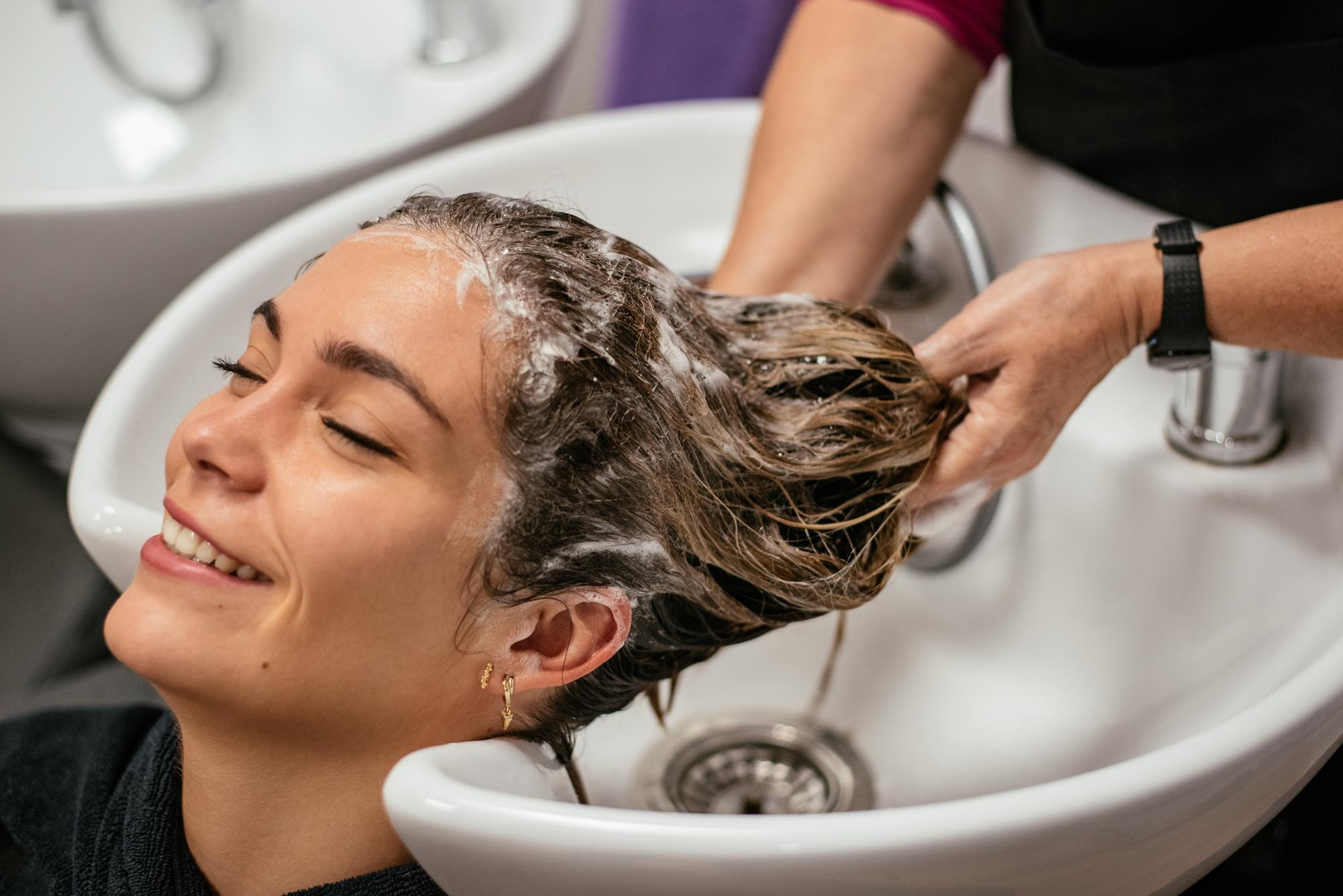
Summary: Monsoon hairfall sends many of us searching for a biotin shampoo, but what can it actually do? This article breaks down the difference between shedding and hair loss, sets honest expectations for biotin in a shampoo formula, walks you through choosing the right wash for your concern, and shows where masks and scalp serums fit into a strengthening monsoon routine.
|
In This Article: Why Does Monsoon Hair Fall Feel Different from Usual Shedding? |
The monsoon arrives, and suddenly your hairbrush, pillowcase, and shower drain all seem to be collecting more strands than usual. If you have been eyeing a biotin shampoo as a potential fix, you are not alone.
Searches for biotin shampoo for hair fall spike every rainy season, and the options can feel overwhelming. But before you add one to your cart, it helps to understand what biotin shampoo can genuinely offer, where its limits lie, and what else your routine might need.
Why Does Monsoon Hair Fall Feel Different from Usual Shedding?
Monsoon hair fall often feels more dramatic because humidity, sweat, and dampness create conditions where strands that were already in their natural shedding cycle seem to come loose all at once. But not every clump in the drain means something is wrong.
Dermatologists draw a clear line between excessive shedding and actual hair loss. Shedding is temporary and usually triggered by stress, seasonal shifts, or changes in routine, while hair loss involves the hair stopping its growth cycle altogether. During monsoon, a lot of what feels alarming is actually shedding, not permanent loss.
That said, hair loss itself can result from a range of factors, including heredity, hormonal changes, and medical conditions, which is why a dermatologist visit is always worthwhile if the shedding feels persistent or patchy. For seasonal shedding that comes and goes, though, the focus shifts to keeping strands strong, reducing breakage, and caring for a scalp that is dealing with extra moisture and oil.
What Can a Biotin Shampoo Realistically Do?
A biotin shampoo for hair growth or preventing hair fall works primarily on the surface of your strands, helping to support their structure and reduce breakage, rather than triggering new hair growth from the root. Setting this expectation early saves a lot of frustration.
Biotin is a B vitamin that plays a role in producing keratin, the protein that forms nails, skin, and hair. That is why you will often see people searching for a biotin and keratin shampoo: the two are connected at a biological level.
However, applying biotin topically through a shampoo is different from ingesting it as a supplement, and the current scientific consensus is that more research is needed to confirm whether biotin, even as a supplement, reliably improves hair health in people who are not deficient.
So what does a biotin shampoo actually deliver? When formulated well, it can help strengthen hair fibres, improve density over time, and tackle split ends. For anyone who deals with hair that feels limp, thin, or snap-happy during monsoon, those benefits are genuinely useful, even if they fall short of regrowing lost hair.
Did You Know? Biotin is sometimes called vitamin B7 or vitamin H. The "H" comes from the German words "Haar und Haut", meaning hair and skin, because early researchers noticed its connection to both.
What Should You Look for in the Best Shampoo for Hair Fall Control?
The right shampoo for hair fall concerns is not about finding the single "best" product on the market; it is about matching a formula to your specific hair type, concern, and ingredient preferences.
When shedding or breakage is the worry, here is what to check on the label or product page before you buy:
| Criteria | What to Look For | Why It Matters |
|---|---|---|
| Formulation | Sulphate-free | Gentler cleansing that does not strip already-fragile strands |
| Hair type suitability | Listed as suitable for your hair type (or "All") | Ensures the formula is not too heavy or too light |
| Stated concern | Split ends, breakage, or strengthening | Confirms the product addresses what you actually need |
| Key ingredients | Biotin, curry leaf extract, proteins, or plant-based actives | Ingredients linked to strand strength and density |
| What it does not claim | Honest about limitations (e.g., does not claim to prevent hair loss) | A trustworthy product is upfront about its boundaries |
Strands that feel weak and prone to splitting during humid weather benefit from a sulphate-free formula with strengthening ingredients, and the Love Beauty & Planet Curry Leaves & Biotin Shampoo fits that profile. Its combination of curry leaf extract and vegan biotin is positioned to help strengthen hair fibres and improve density for thicker, split-end-free hair, all wrapped in a citrussy mandarin scent that makes the wash step feel anything but clinical.
Tip: Resist the urge to skip conditioner or masking during monsoon just because your hair feels damp or oily at the roots. Your lengths and tips still need that moisture barrier, especially if you are dealing with breakage. Just keep the product away from your scalp.
How to Include Biotin in Your Hair Care Routine
If biotin is already part of your shampoo routine, you can build on it with complementary products that focus on keeping your hair conditioned, smooth and protected.
For hair that snaps or splits easily, a mask applied from mid-length to tip offers deeper support than a rinse-out conditioner alone. Breakage during the monsoon feels particularly frustrating, and the Love Beauty & Planet Curry, Biotin & Moringa Hair Mask is built for exactly that moment, combining curry leaf extract, vegan biotin, and moringa to deliver up to 95% less breakage and 15 times fewer split ends.
For anyone noticing that their parting looks wider or their hair feels less dense overall, a targeted biotin-enriched scalp serum can address that concern more directly. Our Vegan Biotin Hair Growth Scalp Serum promotes hair growth and strengthens hair from the roots, with a claim of up to 2,700 new hair strands in one month.
The key takeaway is that each product type has its own lane. A quick-reference breakdown:
| Routine Step | Product Type | What It Targets | Where to Apply |
|---|---|---|---|
| Cleanse | Biotin shampoo | Strand strength, density, split ends | Scalp and lengths |
| Treat | Hair mask | Breakage, split ends | Mid-length to tips |
| Target | Scalp serum | Hair growth, thinning | Scalp only |
Your Monsoon Strengthening Routine, Sorted
Monsoon hair fall can feel overwhelming, but the fix is less about finding one perfect product and more about understanding what each step in your routine can realistically deliver. A sulphate-free biotin shampoo helps strengthen fibres and improve density. A biotin-enriched mask supports your breakage-prone lengths and tips. And if thinning is the deeper concern, a scalp serum brings targeted actives where they are needed most.
If you are ready to put that routine together, explore the full biotin range and find the combination that fits your hair.
Frequently Asked Questions
Q:1 How often should you use a biotin shampoo during the monsoon?
A. Two to three times a week is a good starting point. Over-washing can strip natural oils and leave strands more fragile, especially in humid weather.
Q:2 Can a sulphate-free shampoo clean oily monsoon hair effectively?
A. Yes. Sulphate-free formulas cleanse without harsh stripping, which helps maintain your scalp's natural moisture balance even when oil production increases.
Q:3 Is biotin shampoo safe for colour-treated hair?
A. Most sulphate-free biotin shampoos are gentle enough for colour-treated hair, but always check the product label for specific compatibility notes.
Q:4 Should you oil your hair before using a biotin shampoo?
A. Light pre-wash oiling is fine. Just ensure you rinse and lather thoroughly so oil residue does not weigh your hair down or block the shampoo's ingredients.
Q:5 When should you see a dermatologist about monsoon hair fall?
A. If shedding lasts beyond three months, you notice bald patches, or your parting visibly widens, book a consultation to rule out underlying causes.