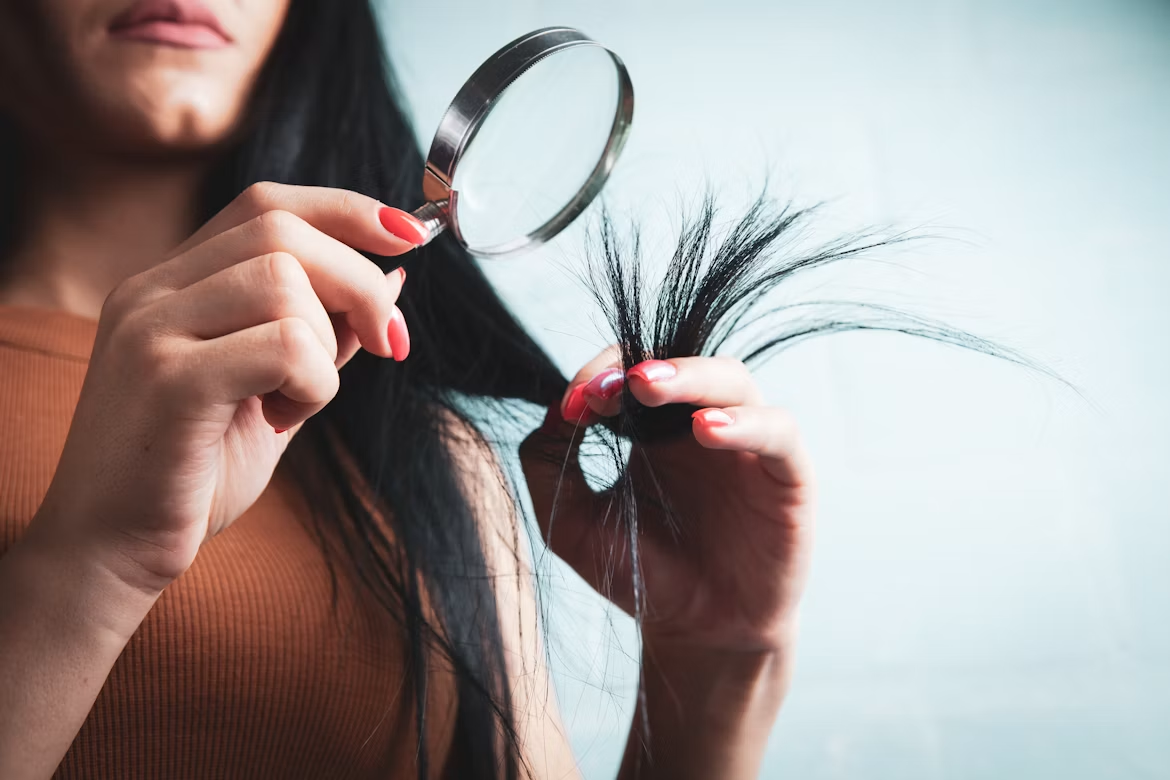
Summary: Monsoon humidity is one of several environmental factors that can worsen split ends. Wet hair is more fragile, and everyday habits like rough towel-drying or brushing damp strands can accelerate breakage. This guide covers why split ends hair damage peaks during the rains, which habits to rethink, and the routine steps (cleansing, conditioning, and masking) that help reduce further splitting so your lengths stay looking healthier.
|
In This Article: |
You know that moment halfway through monsoon when your hair just… stops cooperating? The ends look ragged, strands feel rougher, and no amount of finger-combing seems to smooth things out. If you have been noticing more split ends this season, you are not imagining it.
But here is the encouraging bit: once you understand why the monsoon makes things worse, the split ends hair fix is mostly about adjusting a few simple habits and choosing the right care steps.
Why Do Split Ends Feel Worse During the Monsoon?
Monsoon humidity is one environmental factor in a process scientists call hair weathering, the cumulative wear that UV, humidity, and wind inflict on the hair fibre over time. When the air is heavy with moisture, your hair absorbs water from the environment, swells slightly, and then contracts again as it dries. This repeated swelling and shrinking weakens the outer layer of each strand (often called the cuticle), making the fibre more vulnerable to splitting at the tips.
During the rains, your hair is also wet more often, whether from an unexpected downpour or a post-gym wash. That matters because wet hair is significantly more fragile. So, while monsoon does not single-handedly "cause" split ends, it amplifies the damage that daily friction and handling were already doing.
Did You Know? The technical name for a split end is trichoptilosis. It describes what happens when the outer protective layer of the hair strand is damaged enough for the fibre to literally split into two or more fragments at the tip.
What Causes Split Ends, and How Can You Prevent Them?
Split ends form when the outer protective layer of the hair strand is weakened or worn away, exposing the softer inner structure to damage and eventual splitting. Once a strand has split, it cannot fuse back together on its own, which is why prevention matters more than any after-the-fact fix.
Several everyday factors contribute to split ends in hair:
- Friction: Rubbing hair with a towel, rough pillowcase surfaces, and elastic hair ties all create friction that wears down the strand's surface over time.
- Heat: Excessive use of straighteners, curling irons, or blow dryers on high heat can weaken strands and lead to splitting.
- Mechanical stress: Over-brushing (the old "100 strokes a day" advice, for instance) can directly cause split ends.
- Environmental weathering: UV exposure, wind, pollution, and, yes, humidity all add up season after season.
Prevention comes down to reducing the forces that damage the outer layer. Conditioning is one of the most effective everyday steps: it coats each strand, which helps reduce breakage and split ends after every wash. A leave-in conditioner or detangler after washing adds another protective layer, especially useful if your ends tend to tangle.
What Monsoon Hair Habits Make Split Ends Worse?
The habits most likely to worsen split ends during the monsoon are the ones that add friction or force to already-wet, fragile hair. Here are the most common monsoon-specific culprits:
- Towel-rubbing vigorously after a wash or rain shower. This roughs up the outer layer and creates friction exactly where it hurts most: the ends.
- Brushing through tangles immediately after getting wet. A wide-tooth comb, worked gently from tips to roots, is far kinder to fragile strands.
- Tying wet hair into a tight bun or ponytail. The elastic creates a pressure point on softened, swollen hair, increasing breakage at that spot.
- Skipping conditioner because hair "already feels damp". Humidity adds moisture to the air, not a protective coating to your strands. The conditioner still needs to do its job.
Which Routine Steps Support Split-End-Prone Lengths?
A consistent wash-and-care routine focused on the mid-lengths and ends is the most reliable way to reduce ongoing splitting. The key is gentleness at every step, from how you apply shampoo to how you dry your hair afterwards.
Here is a monsoon-friendly sequence:
| Step | What to Do | Why It Helps |
|---|---|---|
| 1. Cleanse | Massage shampoo into the scalp only; let rinse water carry it through the lengths | Avoids friction on fragile mid-lengths and tips |
| 2. Condition | Apply conditioner from mid-lengths to ends; rinse with lukewarm water | Coats strands to reduce breakage and split ends |
| 3. Mask (1–2x per week) | Apply a hair mask from mid-length to tips; leave on, then rinse thoroughly | Targets the most damage-prone section of the strand |
| 4. Dry | Wrap hair gently in a towel or T-shirt; let it air dry | Prevents friction-related roughing of the outer layer |
| 5. Detangle | Use a wide-tooth comb on damp (not soaking wet) hair, starting from the tips | Reduces mechanical breakage on vulnerable strands |
For lengths that are already showing signs of splitting, Olive Oil & Peptide Bond Repair Damage Rescue Serum Crème works well layered in after conditioning — it reinforces the strand rather than just coating it, which matters if breakage is a recurring issue and not just a monsoon-season concern.
Since mid-lengths to ends take the most damage, this is where a weekly mask earns its place. The Olive Oil & Peptide Hair Mask combination is formulated to target that exact zone, making it a natural fit for step 3.
Once hair is air-dried and gently detangled, the last thing it needs is humidity undoing all that care. This is where the Argan Oil & Lavender No Alcohol Flyaway Stick comes in — swiped on to lock the look in place and tame flyaways for a sleeker finish, without needing a full restyle. On humid days especially, it picks up where step 4's air-dry alone won't hold.
How To Get Rid of Split Ends That Already Exist?
Honestly, once a strand has split, no topical product can permanently fuse it back together. The only way to fully remove existing split ends is a trim. What a good split-end treatment routine does is reduce further splitting, protect the lengths you have, and keep new growth in better condition so you are not caught in an endless trim cycle.
Tip: If a full haircut feels too drastic, ask your stylist for a "dusting", a technique where only the very tips (a few millimetres) are trimmed to remove visible splits without losing noticeable length.
Your Monsoon Plan for Happier, Healthier Ends
Split ends during monsoon are not a sign you are doing everything wrong. They are a normal response to a challenging environment, and the fact that you are paying attention already puts you ahead. Small, consistent adjustments to your routine make a bigger difference than any single product or one-off treatment.
If you are ready to put a monsoon-ready routine together, explore our hair care range to find what fits your hair's current mood.
Frequently Asked Questions
Q:1 How often should split ends be trimmed to keep hair healthy?
A. A trim every 8 to 12 weeks removes existing splits and helps prevent them from travelling further up the strand, keeping lengths in better shape overall.
Q:2 Can sleeping on a silk or satin pillowcase help reduce split ends?
A. Yes. Silk and satin create less friction than cotton, so your hair slides rather than catches overnight, which may help reduce friction-related breakage at the tips.
Q:3 Does tying hair up during rain help protect it from split ends?
A. A loose braid or low bun can reduce tangling and friction from wind and rain, but avoid tight elastics on wet hair because they create pressure points that weaken strands.
Q:4 Are split ends more common in colour-treated or chemically processed hair?
A. Yes. Chemical processing weakens the outer layer of the hair strand, making it more vulnerable to splitting, especially when environmental stressors like humidity are added.
Q:5 Can diet or nutrition play a role in how prone hair is to split ends?
A. A balanced diet supports overall hair health. Nutritional deficiencies may make strands more fragile over time, but topical care and gentle handling remain the most direct everyday prevention.