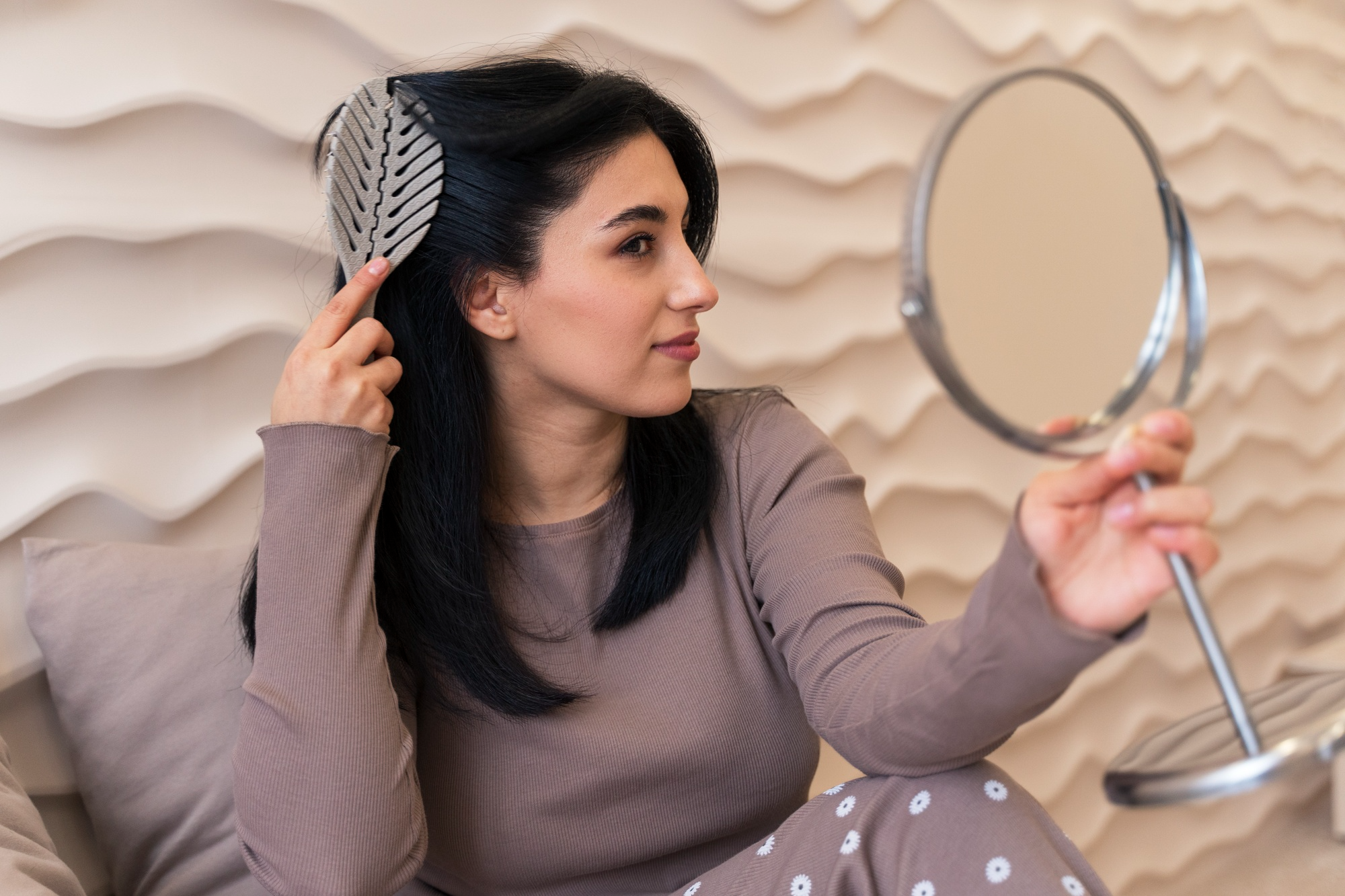
Summary: Finding the best frizz treatment for the rainy season comes down to a simple, consistent routine rather than a single product. Humidity makes dry or damaged hair swell and frizz, so the goal is gentle cleansing, targeted conditioning, and a finishing step that helps keep moisture balanced from mid-lengths to tips. This guide walks you through each step and what to look for.
|
In This Article: |
The moment the rains arrive, your hair seems to develop a mind of its own. That familiar puffiness at the crown, the flyaways that no amount of smoothing can tame: it is enough to make wash day feel pointless. If you have been searching for the best frizz treatment to get you through the monsoon, you are not alone.
The good news is that managing rainy-season frizz is less about finding one wonder product and more about layering the right steps, from a gentle smoothing shampoo to a finishing serum, so your hair stays calmer between washes.
Let's break down why humidity does what it does and how to build a routine that actually helps.
Why Does Hair Get Frizzier in the Rainy Season?
Rainy-season frizz happens because high humidity gives your hair more moisture than it can handle gracefully. Hair that is already dry or slightly damaged has a rougher outer layer, which means it absorbs moisture from the surrounding air more readily. When that moisture gets in, each strand swells unevenly, and the result is the puffy, undefined texture most people call frizz.
It is not just the weather, though. Frizz can also result from dryness, damage, or a combination of both. Certain styling habits, like regular heat styling or rough towel-drying, can make hair look brittle, frizzy, and lacklustre over time. Add monsoon humidity on top of that, and your strands have very little defence.
| Frizz Trigger | What Happens | What Helps |
|---|---|---|
| High humidity | Dry strands absorb excess moisture and swell | A finishing serum on damp hair to help manage moisture |
| Over-cleansing | Scalp and lengths lose natural oils, increasing dryness | A gentle, sulphate-free shampoo |
| Heat or styling damage | The outer layer of the strand roughens, letting moisture in unevenly | A nourishing mask to help smooth and soften |
| Rough towel-drying | Friction roughens strands and lifts the outer layer | Blotting gently with a soft towel or cotton t-shirt |
Understanding these triggers is the first step. Once you know why your hair reacts to the rain, you can choose products that address the actual cause rather than just masking the symptom.
Which Smoothing Shampoo Fits a Rainy-Season Frizz Routine?
A gentle, sulphate-free cleanser is the foundation of any rainy-season frizz routine because it removes dirt and oil without stripping the moisture your hair actually needs. Harsh cleansing can leave strands drier, which only makes them more vulnerable to humidity-driven frizz later.
Look for a formula that cleanses the scalp without over-drying the lengths. For a scalp that needs gentle cleansing during frequent monsoon washes, the Love Beauty & Planet Argan Oil and Lavender Sulfate Free Smooth & Serene Shampoo is a solid fit, using organic Moroccan argan oil alongside handpicked French lavender for a calming, soothing scent. The sulphate-free formula gently cleanses without the squeaky-clean, stripped feeling that can set frizz up to worsen.
If you are curious about what a daily frizz-care routine looks like in practice, seeing the steps in action can help you figure out what suits your hair.
Tip: During the monsoon, you may need to wash more often. Stick with a sulphate-free cleanser so frequent washing does not dry your hair out further and invite more frizz.
What Is the Best Overnight Hair Treatment for Frizzy Hair?
The best hair treatment for frizzy hair during the rains does not necessarily need to sit in your hair overnight. Many people search for overnight options expecting longer contact time to equal better results, but an effective in-shower mask can deliver noticeable frizz control in just a couple of minutes, especially when the formula is designed for exactly that purpose.
Frizzy, rough-textured hair that needs a concentrated conditioning step can benefit from the Love Beauty & Planet Argan Oil & Lavender Hair Mask, which is designed to help reduce frizz for smoother, softer hair in just 2 minutes. After cleansing and conditioning, you simply leave the mask on for 2 minutes, let the nourishment from organic Moroccan argan oil do its work, and rinse. No pillow stains, no overnight fuss.
Where Does an Anti-Frizz Hair Serum Fit in Your Routine?
An anti-frizz hair serum belongs at the very end of your wash routine, applied to damp hair before it dries, to help keep frizz at bay as your strands meet the humid air. Think of it as the finishing layer that helps your earlier steps hold up longer.
| Routine Step | Product Type | What It Does | Key Detail |
|---|---|---|---|
| 1. Cleanse | Sulphate-free shampoo | Gently removes dirt and oil without stripping moisture | Lather and rinse; go easy on the tap |
| 2. Treat | Frizz-control hair mask | Helps smooth and soften the outer layer of each strand | Leave on for 2 minutes, then rinse |
| 3. Finish | Anti-frizz hair serum | Helps manage moisture and reduce frizz on lengths and tips | 1 to 2 drops on damp hair, mid-lengths to tips |
Lengths and tips that feel rough or frizzy after washing can feel noticeably different with the Love Beauty & Planet Argan Oil & Lavender Hair Serum, which uses organic Moroccan argan oil to help reduce frizz for smoother, softer hair. The lightweight formula is designed for damp-hair application and leaves behind a calming lavender scent rather than a heavy, coated feeling.
Tip: Avoid applying serum directly to your roots or scalp. Concentrate on mid-lengths to tips, where frizz tends to show up most during humid weather.
Your Rainy-Season Frizz Routine, Sorted
Rainy-season frizz is not a problem you solve once and forget. It is something you manage with a consistent, layered routine: gentle cleansing, a targeted mask, and a finishing serum that helps your hair handle whatever the humidity throws at it. None of these steps need to be complicated or time-consuming, and the results tend to build with regular use.
If you are ready to put a monsoon-friendly and the best frizz treatment routine together, explore Love Beauty and Planet's frizz-free range and find the combination that fits your hair.
Frequently Asked Questions
Q:1 Can frizzy hair be caused by washing too often during the monsoon?
A. Yes. Frequent washing with harsh cleansers can strip natural oils, leaving hair drier and more prone to frizz in humid conditions.
Q:2 Does air-drying or blow-drying work better for frizz-prone hair in humidity?
A. Air-drying on a low-humidity day is gentler, but using a blow-dryer on a cool setting with a diffuser can help set strands before humidity reaches them.
Q:3 How often should a frizz-control hair mask be used during the rainy season?
A. Once or twice a week is a good starting point. Adjust based on how your hair feels after a few washes.
Q:4 Does tying hair up in the rain help reduce frizz?
A. A loose braid or bun can limit how much humid air reaches your strands, helping reduce frizz exposure when you are outdoors.
Q:5 Can diet or hydration affect how frizzy hair gets during the monsoon?
A. Staying well-hydrated supports overall hair health, but external humidity is the main monsoon frizz trigger, so a good topical routine matters most.